
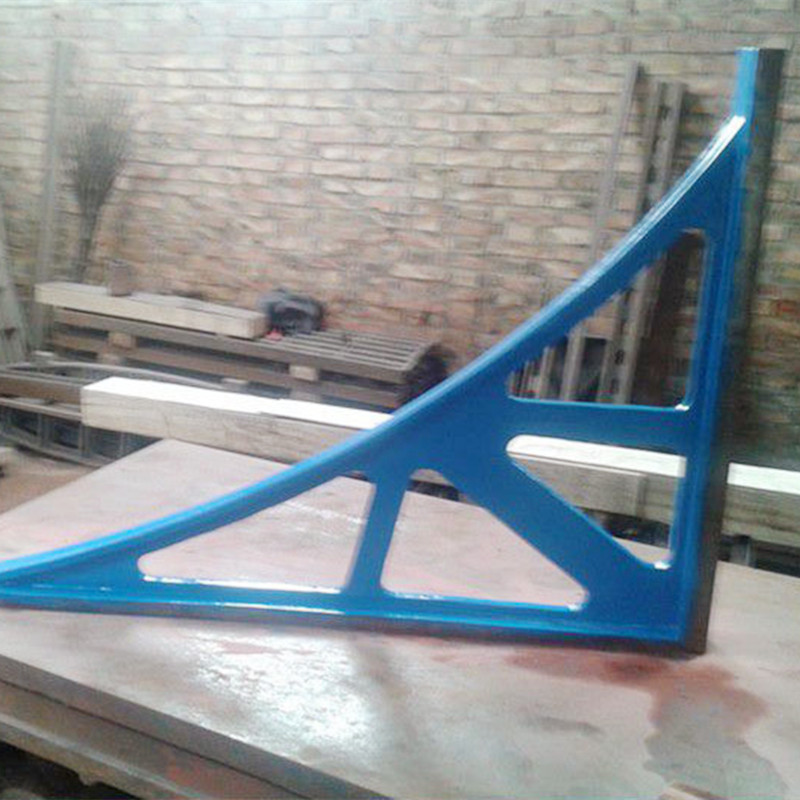
mirror commercial
Understanding Thread Ring Gauge Use in Quality Control Thread ring gauges are essential instruments in the field of quality control, particularly for threaded fasteners and components. They ensure the accuracy of external threads by providing a means to measure the pitch diameter and verify the thread profile of a threaded part. This article delves into the importance, operational principles, and applications of thread ring gauges. What is a Thread Ring Gauge? A thread ring gauge is a cylindrical tool with internal threads that are manufactured to specific standards, typically based on the American National Standards Institute (ANSI) or the International Organization for Standardization (ISO). These gauges come in two primary forms go gauges and no-go gauges. The ‘go’ gauge checks whether the threads of a part are within the acceptable limits, while the ‘no-go’ gauge ensures that the threads do not exceed the allowable tolerances. By using both, manufacturers can effectively ensure that their parts meet precise specifications. Importance of Thread Ring Gauges The accuracy of threaded components is critical in many industries, including automotive, aerospace, and manufacturing. Threads that don't meet specifications can lead to mechanical failures, excessive wear, or safety issues. For example, in the automotive sector, improperly threaded components can cause significant damage or even catastrophic failures during operation. Using thread ring gauges helps manufacturers 1. Ensure Compliance Meeting industry standards for thread dimensions is crucial for regulatory compliance and product certification. 2. Enhance Quality Control Regular use of thread ring gauges allows for consistent quality checks throughout the production process, reducing the chances of defective components. 3. Reduce Costs By identifying non-conforming parts early in the manufacturing process, companies can minimize rework and scrap, ultimately saving on production costs. 4. Increase Customer Satisfaction High-quality products lead to increased customer trust and satisfaction, fostering long-term business relationships. Operational Principles of Thread Ring Gauges thread ring gauge use Using a thread ring gauge involves several straightforward steps. First, it is important to choose the right gauge for the part being tested. Once selected, the operator takes the threaded component and attempts to screw it into the gauge. For the ‘go’ gauge, the part should fit smoothly without excessive force, indicating that it is within the desired tolerance. Conversely, the ‘no-go’ gauge should not accept the component; if it does, the part is rejected based on inadequate thread depth or improper diameter. It’s essential for operators to familiarize themselves with the pitch diameter and thread profile of the gauges, ensuring compatibility. Additionally, regular calibration and maintenance of the gauges are necessary to ensure their longevity and accuracy. Applications of Thread Ring Gauges Thread ring gauges are utilized in various applications across multiple sectors. Some common uses include 1. Manufacturing and Assembly They are extensively used to inspect threaded parts, ensuring they meet the required specifications before assembly. 2. Quality Assurance Laboratories These gauges are often employed in labs where detailed measurements and certifications are required for parts before they enter the marketplace. 3. Field Inspections In some cases, thread ring gauges may be used on-site for maintenance inspections of machinery, ensuring that threads on bolts and fittings are still within acceptable tolerances after extended use. 4. Training and Development They are also valuable teaching tools in engineering and manufacturing courses, helping students understand the critical nature of thread specifications. Conclusion In summary, the use of thread ring gauges is indispensable in the quality control processes across many industries. They ensure that threaded components meet strict specifications, thereby enhancing safety, compliance, and customer satisfaction. As manufacturing technologies advance, the importance of precise measurements will only increase, further solidifying the role of thread ring gauges in modern production environments. By prioritizing the implementation of these gauges, companies can remain competitive and ensure high standards throughout their production processes.
about
mirror commercial
Understanding Thread Plug Gauge Types Thread plug gauges are essential tools used for measuring the size and quality of threaded holes in various manufacturing and engineering applications. These gauges help in verifying whether threaded holes conform to specified tolerances and standards. This article delves into the types of thread plug gauges, their applications, and the significance of choosing the right gauge for specific tasks. What are Thread Plug Gauges? Thread plug gauges are a form of customized measuring instruments designed to check the internal dimensions of threaded holes. They ensure that threads are cut accurately, fit properly, and meet the required specifications. These gauges are inserted into the hole to check for correct thread size, pitch, and form. There are two primary types of thread plug gauges GO gauges and NO-GO gauges. 1. GO Gauges - The GO gauge is used to check whether the threaded hole is large enough to accept the corresponding gauge. It indicates that the thread is within acceptable limits. If a GO gauge fits cleanly into the thread, it signifies that the hole can accommodate the intended fastener or bolt. - For example, in an engineering project, if a GO gauge passes smoothly into the threaded hole, it confirms that the production process has met the necessary standards to allow for proper assembly. 2. NO-GO Gauges - In contrast, the NO-GO gauge is designed to check that the internal thread does not exceed a specified size. If the NO-GO gauge can be inserted into the hole, it indicates that the threading is oversized and thus not acceptable for the application. - The use of a NO-GO gauge is crucial in ensuring quality control in manufacturing processes, as it prevents faulty components from making their way into assembly. Variants of Thread Plug Gauges Thread plug gauges come in various designs based on specific applications and thread types . Some common variants include - Unified Threads (UN) These are standard threads used predominantly in the United States. Various types of UN gauges exist, including UNJ for aerospace applications, which has an increased radius at the root for added strength. - Metric Threads (M) Commonly used globally, metric thread plug gauges are essential for applications dealing with international standards. These gauges check M-thread sizes, ensuring consistency across different regions and industries. thread plug gauge types - Acme Threads These are trapezoidal threads commonly used in power transmission applications. Specialized gauges are made for checking Acme threads due to their unique profile. - Whitworth Threads An older standard predominantly utilized in British and Commonwealth countries, Whitworth gauges verify the dimensions and pitches of these threaded components. Importance of Accurate Measurement Accurate measurement using thread plug gauges directly impacts the efficiency and safety of mechanical assemblies. Some key reasons include - Quality Assurance By regularly using thread plug gauges throughout the manufacturing process, companies can ensure that their products meet client specifications and industry standards. - Reduced Maintenance Costs Properly threaded components reduce wear and tear on machinery, leading to lower maintenance and repair costs over time. - Enhanced Product Longevity Components that are manufactured within the appropriate tolerances are likely to have better performance rates, maintaining their integrity and reducing the chances of failure. - Safety In critical applications, such as aerospace and automotive manufacturing, ensuring that threads are correctly sized is vital for safety, as improper threading can lead to catastrophic failures. Conclusion In conclusion, thread plug gauges are indispensable tools in ensuring the accuracy and integrity of threaded holes in various applications. Understanding the different types of thread plug gauges—GO and NO-GO, along with their specific variants—enables manufacturers and engineers to choose the right tools for their specific needs. With the correct gauges, businesses can enhance product quality, improve safety measures, and maintain high standards of precision in their manufacturing processes. As industries continue to evolve, the importance of adopting reliable measurement tools like thread plug gauges will remain a cornerstone of successful engineering practices.
-

High quality industrial productsagement

High quality industrial products
View Details -

Meet the diverse needs of customers

Meet the diverse needs of customers
View Details -

Strict quality control

Strict quality control
View Details -

Top raw materials

Top raw materials
View Details -

Trusted supplier

Trusted supplier
View Details
Our application



news and information

Vanne à guillotine de 8 pouces pour applications industrielles et de plomberie
Vannes à Panneau Couteau de 8 Pouces Un Équipement Essentiel pour l'Industrie Les vannes à panneau
Valve Selection Guide for Industrial Applications
As a leading wholesaler in industrial equipment, Storaen (Cangzhou) International Trading Co. unders

welding inspection ruler
The Importance of Welding Inspection Rulers in Quality Control In the world of manufacturing and con
 English